



Custom plastic moulding
Finding the right partner for custom plastic moulding means relying on an experienced engineering team capable of transforming an idea into a high-performance injection mould.
At Idea Stampi, we design and manufacture plastic injection moulds tailored to each project, supporting customers from feasibility analysis and co-design to mould testing and industrial production. Our goal is to deliver reliable, durable and high-precision tooling that optimises production efficiency and ensures consistent quality over time.
Whether you require a new mould for a complex technical component or want to optimise an existing production process, we provide customised solutions developed around your product, materials and production targets.
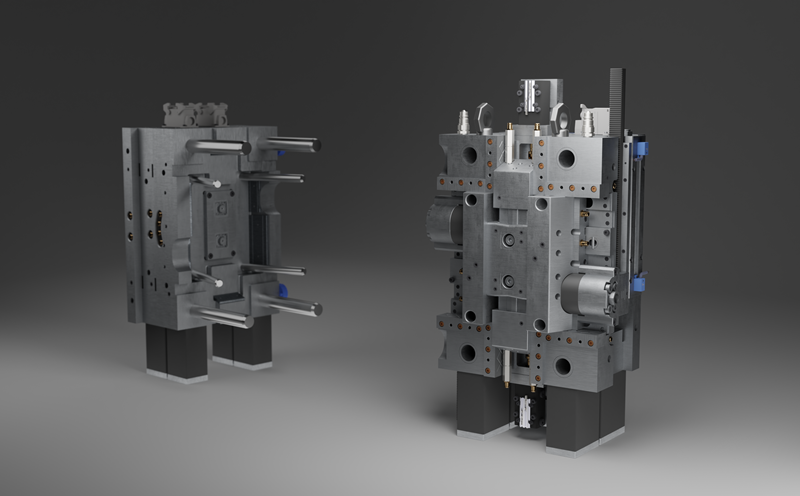
What is custom plastic moulding?
Custom plastic moulding is the process of designing and manufacturing plastic parts that are shaped specifically around one customer's requirements, rather than adapted from an existing standard product.
The “custom” element covers geometry, material, finish and production volume: every mould is engineered from your specifications, not the other way around.
At Idea Stampi, this starts with co-design. Whenever it is useful, we sit down with your technical team before a single line is drawn, to align on the aesthetic requirements, the material behaviour and the production constraints of the part. That early alignment is what later avoids costly redesigns once tooling has already started.
Co-design
Our core philosophy is captured in our name – Idea Stampi actually means “Mouldings Idea”. This is because we are able to deliver a complete service of custom plastic injection moulding.
We start, only upon request, from a co-design phase conducted in collaboration with you as your idea is the root of the development phase. Co-designing takes place in three main steps:
1. First of all, we discuss and analyze with you the aesthetic aspects, which require to always bear in mind the components that will be made from thermoplastic material
2. During the second phase, we go on discussing and assessing the project aspects, including the choice of the most suitable material to be used
3. Finally, we make all required modifications to reach the final project and the construction of the various custom plastic injection mouldings
The advantages of this process are easily explained: the constant interaction with your technical department from the very beginning helps reduce costs and avoids redesign interventions to adapt the model to the stamping requirements.
Design & engineering
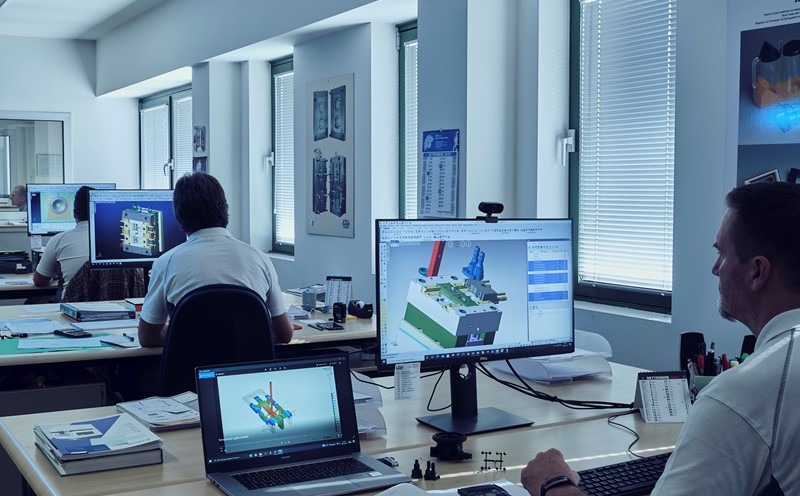
The almost maniacal attention to even the tiniest details, striving to meet all the specifications you ask for, has led us to develop an engineering process that can guarantee maximum reliability as well as a complete plastic injection moulding service through the skills, expertise and experience of our technicians, combined with the state-of-the-art technologies (CAD/CAM/CAE) we use.
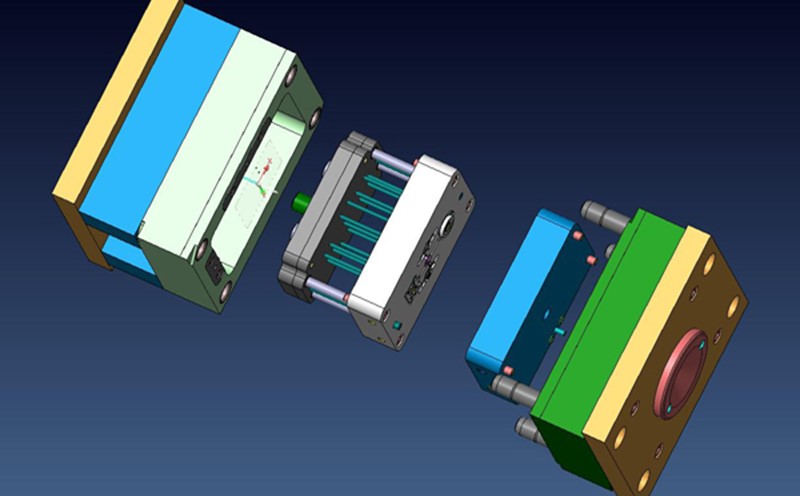
The integrated stamping simulation system VISI Flow allows technicians to engineer the part, accurately performing a high number of important analyses, and defining the best position of the gate, along with the optimization of thicknesses and conditioning
Please note that the entire production process is performed in-house – from mould construction to testing –, to offer you the best possible quality-price ratio and a top-quality performing product that will last over time.
To know more about our design and engineering process, please visit the dedicated page: Injection mould design.
Mould construction
We design all products in order to provide long-lasting performance and amortize investments, with the largest number of parts possible. In addition, our moulds qualify themselves as being extremely reliable because they are tailor-made on your need.
Choose a supplier that listens to your requests for your custom plastic injection moulds
Contact us free of charge
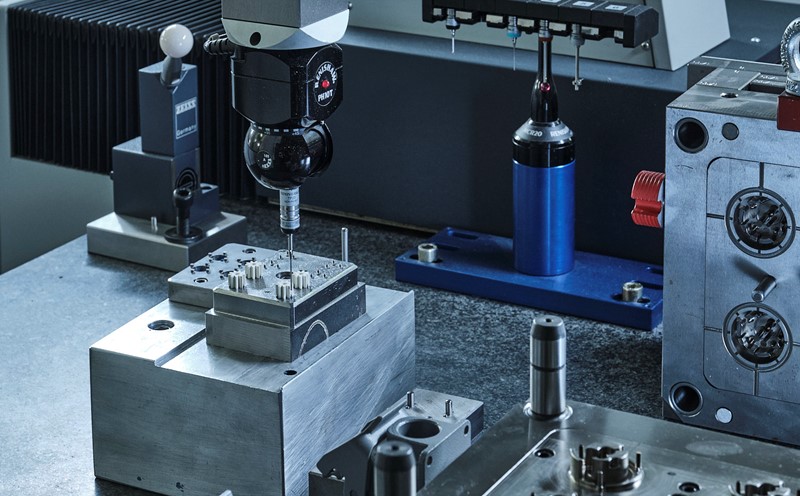
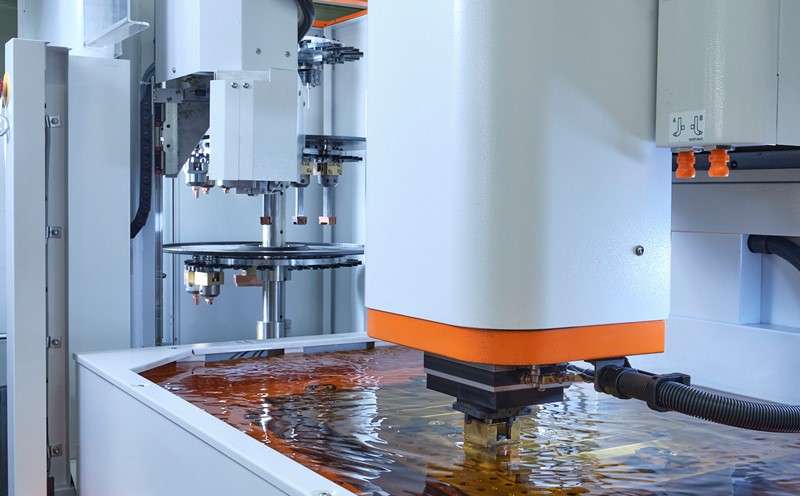
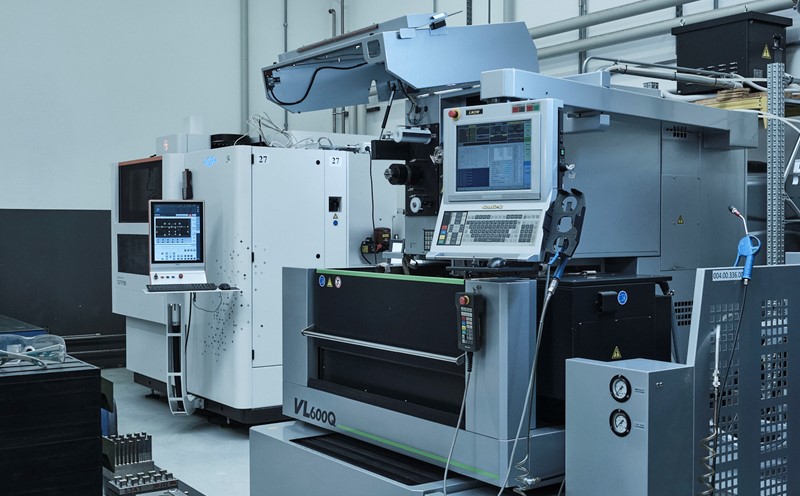
Learn more about our production department. We use a state-of-the-art machinery, and an integrated CAD/CAM/CAE system which allows us to process all the parts using the same 3D model, avoiding data transcription or interpretation errors. Our operators often work with electrodes and tools that are so small that they have to use a magnifying glass during processing phases.
This is the production process that allows us to deliver a proper plastic injection moulding service that you’ll hardly find somewhere else.
Mould tests
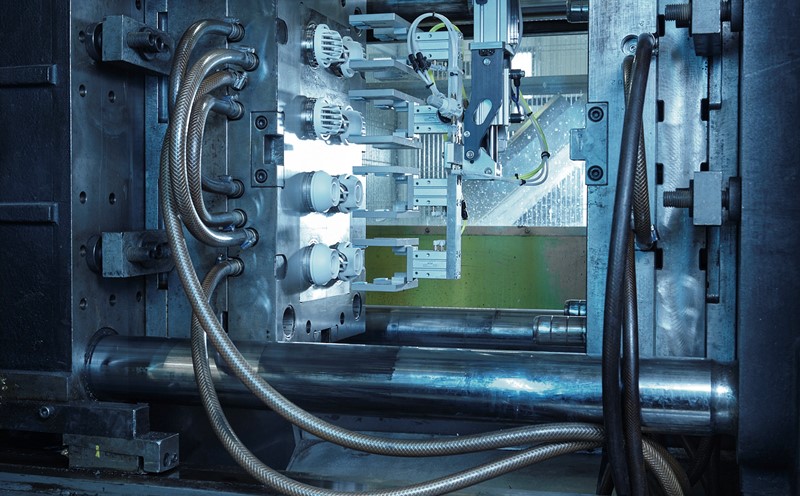
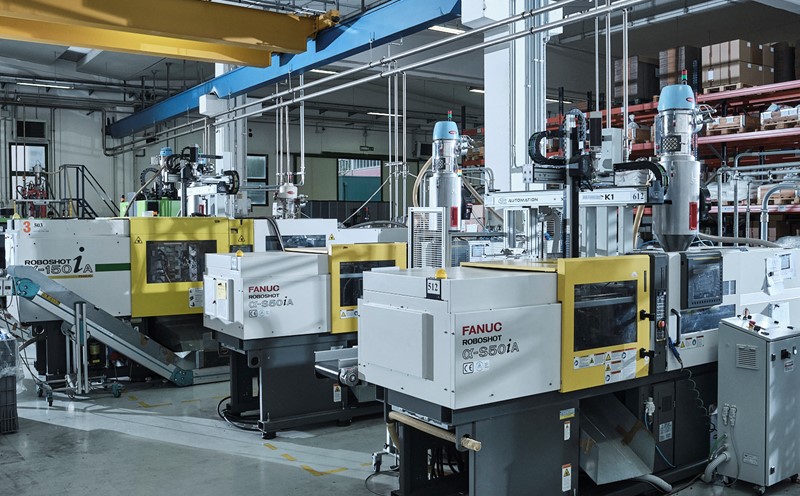
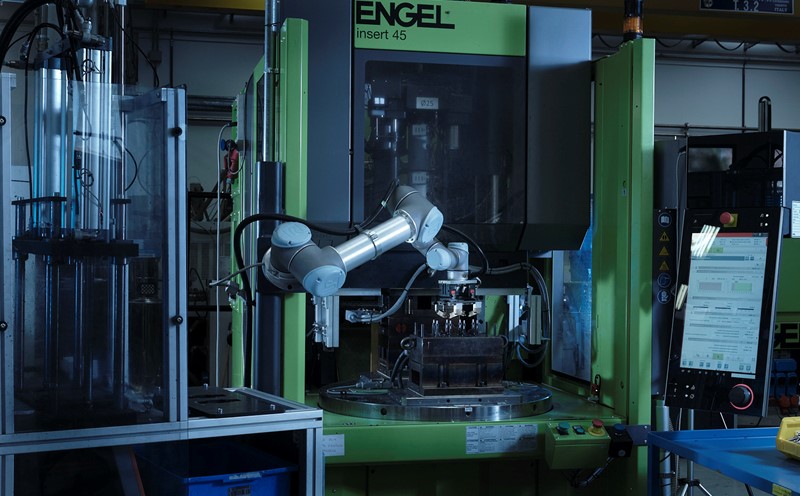
To complete the production cycle, Idea Stampi tests the mould in-house, having at its disposal 13 horizontal presses with a clamping force between 25T and 400T in addition to two vertical presses with a tonnage of 45T and 60T. The production department will soon see the installation of an additional machine with a 280T tonnage, and the expansion of the warehouse area will be completed at the beginning of 2024.
In addition to testing and inspection activities, we can also provide a pre-series service, performing the first production batches and hence optimizing the stamping cycle that will then be delivered to the customer.
Upon request, we supply the samples alongside Dimensional Test stamping cycle results.
Prototypes/pilot moulds
You can opt for a pilot mould when it is necessary to provide rapid feasibility or functionality checks on parts, or before building the final mould. This is the ideal solution for reducing investment risks when dealing with multiple-impression moulds and, in the meantime, testing the realization options.
This type of custom plastic injection moulds has several applications even when numbers are so low that minimum investment is required, and manufacturing by using traditional technologies would generate excessively high costs to produce the parts.
The solution of using pilot moulds is thus a winning decision because we can manufacture injection moulds to stamp quantities of up to a few hundred thousand parts.
In search of a plastic injection moulding service?
Contact us with no commitment
Materials for plastic injection moulding
Material choice shapes almost everything downstream — strength, finish, tolerances and cost. Our team supports you in selecting the thermoplastic that fits your application, from standard polymers to technopolymers and superpolymers for demanding sectors such as medical and automotive.
|
Material Family |
Typical Properties |
Typical Applications |
|
Standard Polymers (PP, PE, PS) |
Cost-effective, good chemical resistance, easy processability |
Packaging, consumer goods, general-purpose housings |
|
Engineering Polymers (PA, POM, PC) |
High mechanical strength, dimensional stability, excellent wear resistance |
Automotive components, electrical and electronic parts, precision technical components |
|
High-Performance Polymers (PEEK, PPS, PSU) |
Outstanding resistance to high temperatures, chemicals and mechanical stress |
Medical devices, aerospace components, high-performance industrial applications |
|
Reinforced Compounds (Glass- or Fibre-Filled) |
Enhanced stiffness, structural strength and dimensional stability |
Structural automotive parts, industrial machinery components, load-bearing applications |
Core and cavity: the heart of every mould
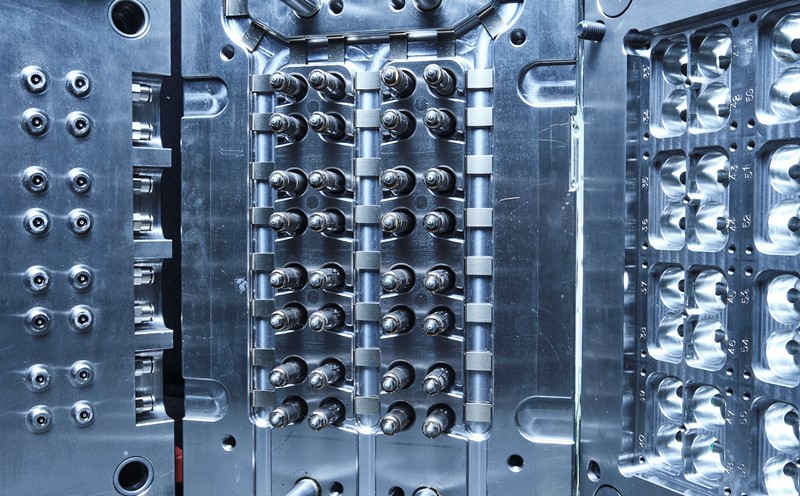
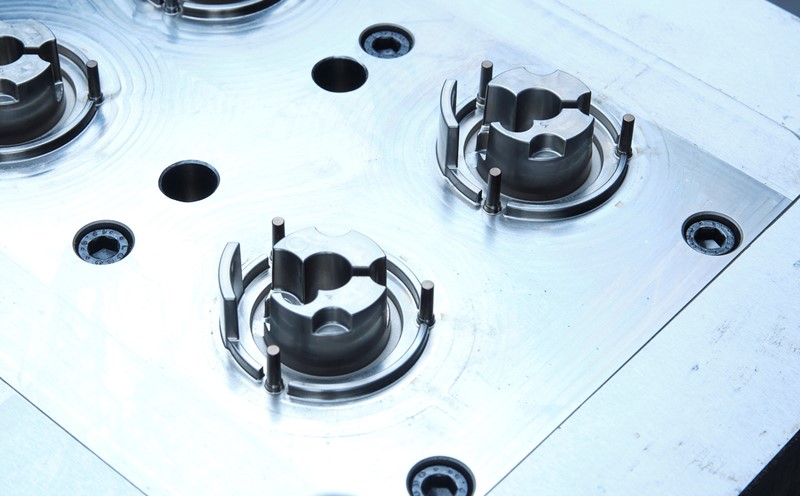
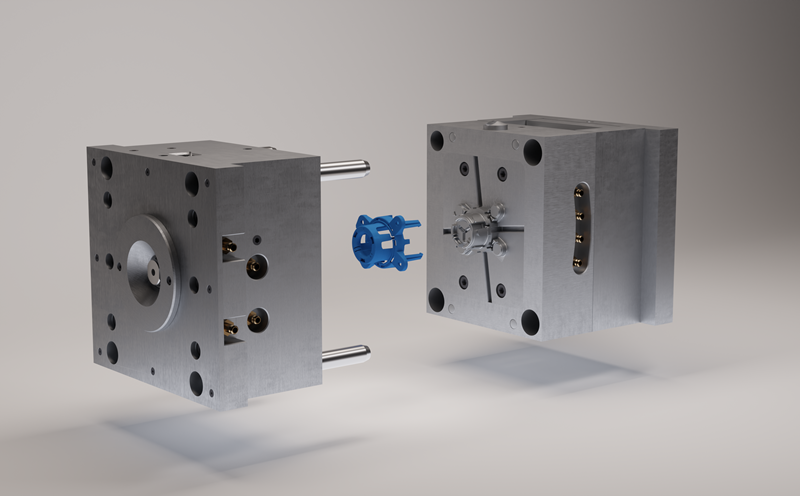
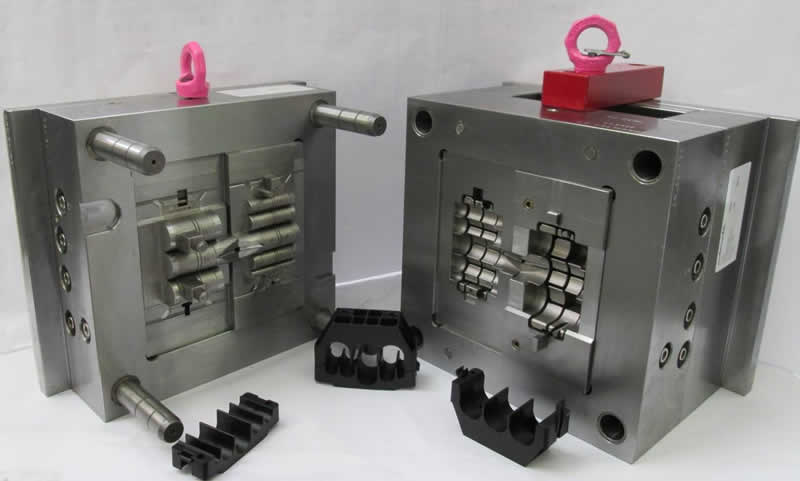
Every injection mould is built around two elements: the core and the cavity. Together, they determine the shape, the surface finish and the dimensional accuracy of the finished part; if they are not designed and aligned correctly, defects such as flash, short shots or warpage can follow.
We select core and cavity materials (from tool steels such as P20 and H13 to stainless steel and aluminium) based on production volume, part geometry and the finish you require, and we manufacture and test every component in-house.
This is a large enough topic that we cover it in full detail separately: read our complete guide to core and cavity design, materials and best practices.
Types of injection moulding we offer
Beyond standard single-shot injection moulding, we support a range of moulding technologies chosen to match part complexity and function:
- Multi-shot and overmoulding: combining two or more materials or colours in a single part.
- Insert moulding: moulding plastic directly around metal or pre-formed components.
- Micro injection moulding: high-precision tooling for very small, high-tolerance parts used in medical and electronic applications.
- Gas-assisted moulding: for thicker sections that need to stay light and dimensionally stable.
Not every technology suits every project: our engineering team will recommend the right one for your part during the co-design phase.
Why choose Idea Stampi
Choosing Idea Stampi for custom precision injection moulding offers a multitude of benefits that set us apart as a trusted and reliable manufacturing partner. Here are some of the advantages you can expect:
Reliability over speed at any cost
For us, reliability is a choice, and speed is a consequence of getting the process right. We would rather engineer a mould correctly than rush a project that will need reworking later — which is why our clients keep coming back for their next custom plastic moulding project, not just their first one.
What influences the cost of your mould
We don't publish a fixed price list, because the cost of a custom mould genuinely depends on your part: geometry and number of cavities, material, required tolerances, expected production volume and finish. What we can promise is transparency: during the quotation phase, we walk you through exactly which factors are driving the cost of your project, so there are no surprises later.
Lead times and production capacity
Our in-house production, from mould construction to testing, means we control the full cycle and can give you a realistic, accountable delivery date rather than a best-case estimate.
Quality you can verify
Our management system is certified ISO 9001 (quality), ISO 14001 (environment) and ISO 13485 (medical devices) — not as a formality, but because control has to be demonstrable, especially in regulated sectors.
Built to last, not just to ship
Sustainability isn't a separate initiative for us: designing a mould that lasts, avoids waste and can be repaired, rather than replaced, is part of the same culture of control that runs through everything we do.
Sectors we serve
The sectors that trust Idea Stampi with their most demanding parts have one thing in common: they can't afford instability in the supply chain. That's why we work across automotive, medical, electrical and electronic, and packaging and, increasingly, cosmetics and defence, two areas where we are expanding our capacity to support more technically demanding, higher-value tooling.
Recent projects include multi-cavity safety systems for automotive, precision connectors for medical infusion devices, and laser-welded systems for electronic QR code readers, each one built around the same process: co-design, engineering, in-house production and testing.
A precision manufacturing partner based in Italy
Idea Stampi has been building plastic injection moulds since 1986, from a 5,000 sqm facility in Rovereto, in Northern Italy, a location that sits at the crossroads of the Italian, Austrian, German and Swiss markets, which helps us keep collaboration close and lead times predictable even for international clients.
We are part of Fluid-o-Tech Group, an international industrial group, which gives us the stability and investment capacity of a larger organisation while keeping full technical and operational control in-house.
For manufacturers evaluating suppliers outside Italy, working with a European partner means shorter, simpler logistics within the EU, direct technical dialogue without time-zone friction, and a quality system (ISO 9001, ISO 14001, ISO 13485) that is verifiable rather than assumed.
Get in touch with our team
FAQ
- What is the difference between plastic injection moulding and custom plastic moulding?
Plastic injection moulding is the manufacturing process itself. Custom plastic moulding refers to using that process to produce parts designed specifically around one customer's requirements, rather than from an existing standard mould. - Can Idea Stampi handle low production volumes?
Yes. Pilot moulds and prototype tooling let us validate feasibility and produce smaller batches - from a few hundred to several hundred thousand parts - without the investment required for full production tooling. - Which materials can you mould?
We work with standard thermoplastics, technopolymers and superpolymers, selecting the material together with you based on mechanical, thermal and regulatory requirements. - What is the role of core and cavity in my mould?
The core and cavity are the two halves that shape your part. Their design and material choice directly affect surface finish, dimensional accuracy and how easily the part is ejected from the mould. - Do you support medical and other regulated sectors?
Yes. Our quality system is certified ISO 13485 for medical devices, alongside ISO 9001 and ISO 14001. - Where is Idea Stampi based, and can you support clients outside Italy?
We are based in Rovereto, Northern Italy, and are part of the international Fluid-o-Tech Group. We regularly support clients across Europe and beyond. - How do you keep the cost of custom moulding under control?
We discuss the cost drivers of your project transparently during quotation (geometry, cavities, material, tolerances and volume) so you understand exactly what you are paying for.