



Plastic Mould Maintenance
An intensive production process can wear moulds out, break, or become less efficient. What to do? The solution is plastic mould maintenance. Discover in the following article all the details about it.
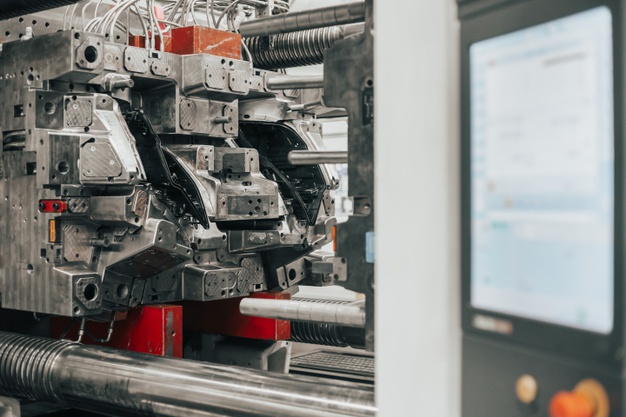
Extending the life of the moulds is the most efficient way to reduce production costs and guarantee the perfect final product. Worn or damaged moulds can compromise performance accuracy. For this reason, it is important to carry out proper scheduled and precautionary plastic mould maintenance operations to avoid premature replacement.
How long does a plastic injection mould last?
The lifespan of a plastic injection mould can vary significantly depending on its design, the materials used, and the production volume. In some cases, a mould may last only a few thousand cycles, while a high-quality tool made from hardened steel and properly maintained can operate for more than 1 million cycles.
Factors such as abrasion, corrosion, thermal stress, and the wear of moving components all affect durability. This is why regular inspection and preventive injection mould maintenance are essential to extend service life and ensure long-term stability.
Plastic injection mould maintenance
Maintenance consists of a series of operations that are functional to the durability of the plastic injection mould.
Let’s delve into these phases:
Cleaning procedures
Cleaning procedures ensure the longevity and efficiency of your plastic injection mould. In fact, these protocols optimize the output performance by eliminating residue and contaminants, guaranteeing the maintenance of the product.
Wear level control
In order to extend the lifespan of plastic injection moulds, a core maintenance procedure you can perform is to accurately control wear level on a regular basis. These assessments will help you address wear-related issues, minimizing downtime.
Worn out parts reconstruction
The reconstruction of worn out components, such as edges, input and output zones and shears is an instrumental operation to restore the full functionality of the part, saving time and resources.
Repairing
In this case, the maintenance of plastic injection moulds consists of promptly repair processing errors, breaks and cracks that could compromise the structural integrity of the mould. This is an effective way to cut replacement costs and restore the peak performance of the mould.
Reset of ruined or damaged parts
Whether a mould part results ruined or damaged due to wear, misuse or other factors, the component can be reset. In this way, functionality is restored to ensure consistent quality.
Innovative technologies
With groundbreaking, state-of-the-art technologies, such as an optical scan, it is possible to rebuild the 3D model of the component, if not entirely build the whole plastic injection mould. This advanced maintenance tool is capable of enhancing the reliability and durability of the part.
Are you interested in our plastic mould maintenance service?
Contact us for a free quote
The advantages of plastic mould maintenance
Regular maintenance is a strategic choice that protects your investment and ensures production continuity. In particular:
- Reduced downtime and repair costs: preventive maintenance detects small issues before they escalate, avoiding expensive emergency repairs.
- Extended mould lifespan: scheduled servicing maximizes tool life; properly maintained hardened steel moulds can exceed 1 million cycles.
- Consistent part quality: clean cavities and controlled wear ensure every production run meets specifications, especially in high-precision sectors like medical or automotive.
- Prevention of failures: regular inspections identify cracks or component fatigue before they cause irreparable damage.
- Optimized production efficiency: well-maintained moulds run at peak performance with stable cycle times.
Laser welding perfectly complements this approach, allowing operations in small areas to avoid overheating risks while delivering:
- Quick maintenance ideal for minimizing production stops
- Extreme precision for micro-repairs
- Great work flexibility across all mould materials and dimensions
Prevention is better than cure, Idea Stampi's systematic maintenance transforms potential costs into strategic advantages for your production continuity.
Laser Welding: the most effective method for mould maintenance
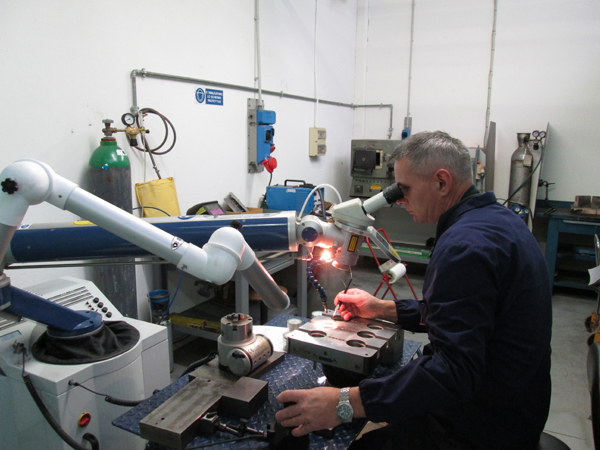
Whether a normal or special repairs - such as micro-welding at high precision - are required, laser welding has become the main technique used for plastic mould maintenance procedures. This kind of welding can be applied to moulds of every dimension and material, such as steel, bronze, copper, aluminum and titanium, with hardness to 60 HRC.
This advanced method allows to fully restore the mould, making changes that do not distort it or let it lose its main features like geometry and dimensional tolerances.
Discover more about laser welding for mould repair
What factors influence the maintenance of plastic moulds?
The frequency and complexity of plastic mould maintenance depend on variables that we govern through precise analysis:
- Steel type: hardened steel moulds significantly outlast aluminium tools, but require a rigorous method to maintain their surface integrity.
- Mould complexity: intricate designs with slides, lifters, or hot runners require a structured technical dialogue to ensure every component is aligned.
- Plastic material: abrasive fillers like glass fibre, mineral fillers or high-melting-point polymers (superpolymers) increase mechanical erosion and thermal stress.
- Production environment: excessive clamping pressure, high injection speeds, poor lubrication, multiple ejections, corrosive workshop atmospheres, uncontrolled humidity, or untreated coolant all accelerate wear and corrosion dramatically.
Understanding these variables allows Idea Stampi to create customized maintenance schedules that extend tool life, prevent costly downtime, and maintain dimensional precision across demanding production cycles.
Idea Stampi’s method: our culture of control
At Idea Stampi, plastic mould maintenance is not a single intervention but a structured method based on analysis, control, and responsibility.
Each operation starts from a technical evaluation of the mould’s condition and production context. Based on this, we define targeted actions that integrate advanced technologies, such as laser welding and 3D scanning, within a controlled process.
We don’t just repair moulds: we manage their performance over time.
This method allows us to: prevent critical failures, ensure dimensional precision, reduce downtime and support production continuity.
Choosing Idea Stampi means relying on a partner that transforms mould maintenance into a strategic asset for your production.
Choose Idea Stampi for your injection mould maintenance