

PEEK injection moulding
PEEK injection moulding for components that have to replace metal, withstand sterilisation or work at high temperatures. At Idea Stampi we design and build the mould for PEEK in-house, test it on our own presses and produce your parts, from pre-series batches to finished components, in Italy, under a certified quality system.
Get a quote
Why choose PEEK for injection moulding?
When a component has to work where most plastics give up (continuous heat, steam, aggressive chemicals, repeated sterilisation), PEEK is often the material that makes it possible to replace metal without compromising performance. PEEK (polyether ether ketone) is a semi-crystalline thermoplastic of the PAEK family: lighter than the metals it replaces, inherently flame retardant and stable across a wide temperature range.
Choosing PEEK injection moulding over machining from stock pays off as volumes grow: the part comes out of the mould in its final shape, with consistent tolerances from the first piece to the last and far less waste of an expensive raw material.
What Are PEEK Main Properties?
PEEK is a material that features multiple core characteristics, which make it an excellent choice for a wide range of industrial applications.
Among its properties is important to highlight:
- Mechanical strength: PEEK is particularly suitable for heavy-duty sectors, demonstrating its structural integrity even under stresses and strains, making it highly resilient.
- Excellent dimensional stability: the material displays minimal expansion or shrinkage, maintaining its precise dimensions.
- Flame resistance: PEEK is hardly flammable and self extinguishing, meeting stringent fire safety standards.
- Low smoke emission: it produces very low flue gas density under combustion.
- Temperature resistance: the material can endure extremes from as low as -60°C to as high as 260°C in environments such as hot water or steam.
- Low coefficient of linear expansion: in the PEEK injection moulding process, where temperature variations are an integral part of the process, the material features minimal dimensional changes, guaranteeing the reliability of the whole process.
Advantages of PEEK injection moulding
Moulded rather than machined, PEEK turns its material properties into concrete benefits for your components.
Metal replacement
Lighter parts that do not corrode, in applications that used to require steel or aluminium.
Repeated sterilisation
Withstands gamma-ray exposure and repeated sterilisation cycles.
Chemical resistance
Components keep their integrity in contact with aggressive fluids and in corrosive environments.
Complex geometries in one cycle
Features that would take several machining operations are moulded in a single shot.
Consistent quality at volume
Every part comes from the same mould, with repeatable dimensions and tolerances.
Less material waste
Injection moulding for PEEK uses only the material the part needs, unlike machining from expensive PEEK stock.
The several applications of PEEK
PEEK injection moulding is the perfect solution for a multitude of industries that are interested in enhancing the level of their production by using a highly performing material.
Aerospace and Automotive
When it comes to the aerospace and automotive fields, PEEK injection moulding is used to manufacture components that demand high mechanical strength and excellent thermal stability. This thermoplastic resin can withstand intense pressures and temperatures, becoming the perfect choice for crafting bushings, bearings and insulation components.
Medical and Food Processing
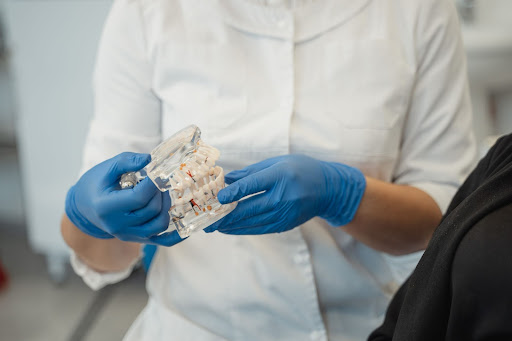
PEEK is a biocompatible and chemically resistant material. For this reason, it is often used for the creation of medical implants and sterile medical devices.
This material is also used in the food processing industry for parts that require high-temperature resistance while preserving the integrity of the product and preventing the risk of external contamination.
Oil & Gas
PEEK injection moulding is a valuable technique for the production of valves, pumps, and compressors for the Oil & Gas industry. In this case, it is important to maintain their integrity even in harsh and corrosive environments.
Electronics
PEEK is renowned for its excellent insulating properties and low smoke emission. It is used to engineer and manufacture parts, such as connectors, insulators and electronic components.
Are you looking for a partner for your next PEEK injection moulding project?
Contact us!Certifications
Our management systems are certified, so the quality of every PEEK project is documented and auditable. See all our certifications.
UNI EN ISO 9001:2015
Quality management
Covering the manufacture of injection moulds for thermoplastic parts.
UNI EN ISO 14001:2015
Environmental management
Held since 2021.
ISO 13485
Medical devices
Quality management for medical devices.
The PEEK injection moulding process explained
PEEK injection moulding is a complex process which requires highly specialized equipment capable of handling extreme temperatures.
-
1
Drying
PEEK is dried thoroughly to remove any moisture that might lead to hydrolysis and compromise the final part.
-
2
Melting
The polymer is heated at or above 360°C (680°F). Precision is key: overheating can degrade the resin.
-
3
Injection
The melt is injected into the mould cavity under controlled pressure, for consistent and even filling.
-
4
Cooling
PEEK is prone to anisotropic shrinkage, so cooling rate and pressure are controlled throughout solidification.
-
5
Ejection
The part is ejected from the mould for any post-processing and a final quality check.
Why should you opt for Idea Stampi PEEK injection moulding?
Idea Stampi is not only involved in injection moulding for PEEK and other thermoplastic materials: we follow your project from the mould to the finished part.
- Co-design from day one: on request, our engineers work with your technical team on material choice and design for moulding, to cut costs and avoid redesigns.
- Simulation before steel: CAD/CAM/CAE tools and VISI Flow simulation define gate position, wall thicknesses and cooling before the mould is built.
- In-house mould testing: moulds are tested on our own presses, with pre-series runs and samples with dimensional test results on request.
- Pilot moulds: a way to verify feasibility and function before investing in the production mould.
- Made in Italy since 1986: based in Italy, with short EU logistics and direct technical dialogue
Contact Idea Stampi to learn how we can use PEEK thermoplastic in your injection moulding projects.
Contact us!FAQ
How does PEEK injection moulding work?
PEEK (polyether ether ketone) is a semi-crystalline thermoplastic resin. In injection moulding it is brought to its melting point, so that it flows, and is injected into the mould cavity, where it cools and solidifies. The process is complex, but it delivers excellent dimensional precision and tolerances, and long-lasting components.
What does a mould for PEEK need?
A mould for PEEK runs much hotter than a standard thermoplastic mould: material suppliers indicate mould surface temperatures of around 170 to 200°C, needed for the part to crystallise properly. This calls for stable, uniform mould heating, generously sized gates to compensate for the higher shrinkage of PEEK, and careful venting, because the melt tends to flash.
Is moulding for PEEK more cost-effective than machining?
It depends on volumes. The mould is an upfront investment, but once it is built, moulding for PEEK produces parts in their final shape, with consistent tolerances and far less waste than machining from stock. For low volumes or design validation, a pilot mould can be the right first step.
Is PEEK suitable for medical devices?
Yes. PEEK is biocompatible and tolerates gamma-ray exposure and sterilisation, which is why it is used for implants and sterile medical devices. Idea Stampi's quality system is certified ISO 13485 for medical devices.
Do you work with clients outside Italy?
Yes. From our headquarters in Rovereto, in Northern Italy, we regularly support clients across Europe and beyond. Send us drawings and requirements through the contact form and we will get back to you with a quote.