



Metal replacement solutions: engineering polymers built to outperform metal
Manufacturers switch from metal to engineering polymers for one reason: parts that perform as well, or better, at a lower total cost. Since 1986, Idea Stampi has applied that same rigour to metal replacement projects across automotive, aviation, electrical, electromechanical and medical applications. If a metal component is adding weight, cost or corrosion risk, we can help you find, test and produce a polymer alternative.
What is metal replacement and why are manufacturers switching?
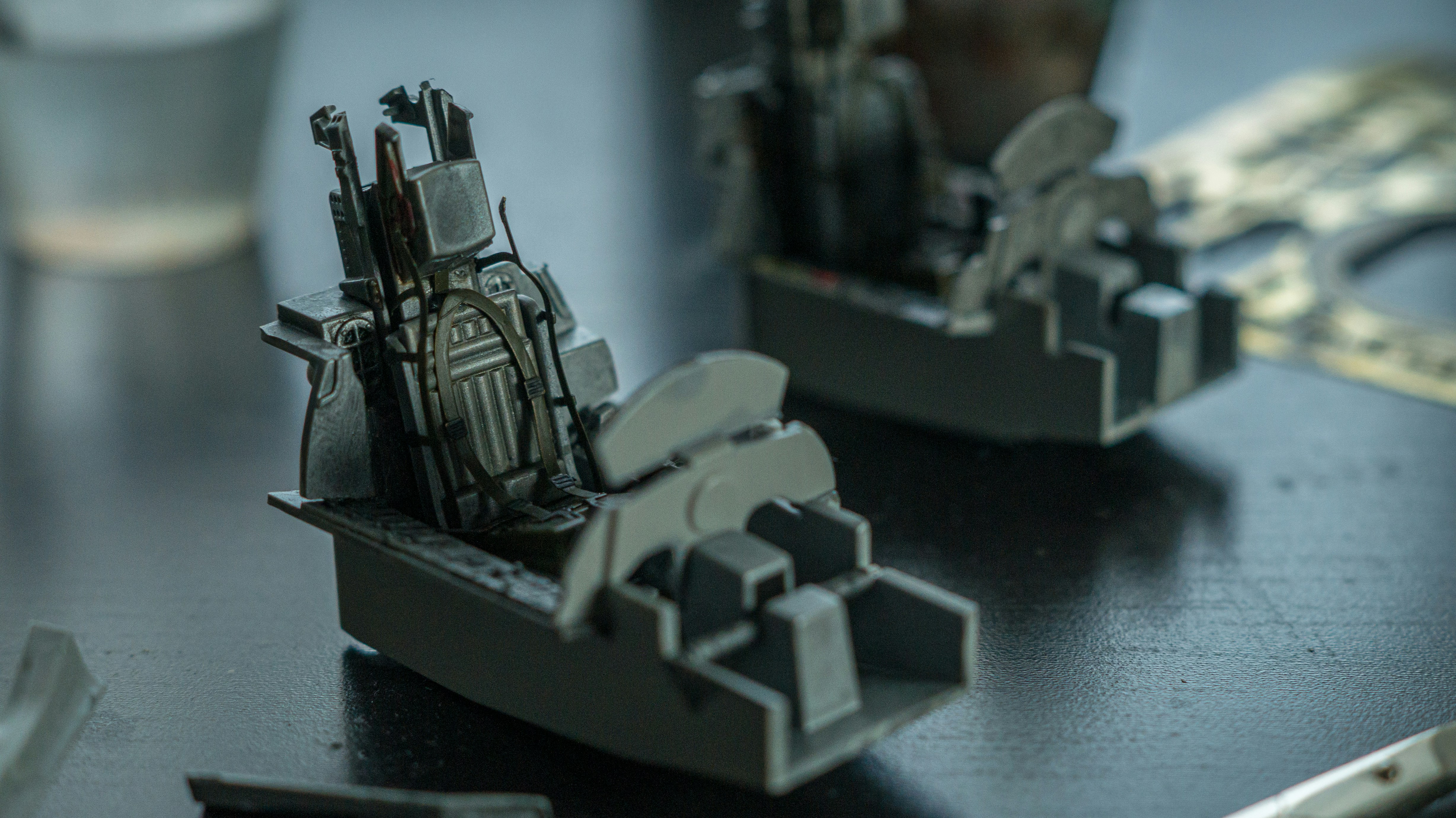
Metal replacement means substituting a metal part with a high-performance engineering polymer, or technopolymer, engineered to match or exceed its mechanical, thermal and chemical resistance. Done well, it also cuts weight and production cost.
Technopolymers are also known as engineering plastics or engineering polymers precisely because they possess the strength and stiffness needed to take on roles traditionally reserved for metal.
Manufacturers switch for several concrete reasons:
- Weight reduction: polymers are inherently lower density than steel or aluminium; the exact saving depends on part geometry and material choice, but it is rarely marginal.
- Corrosion resistance: no rust, no chemical degradation, no protective coatings to maintain over the product's life.
- Design freedom: complex geometries, integrated features and part consolidation that would be expensive or impossible to machine in metal.
- Fewer secondary operations: net-shape moulding reduces or removes machining and finishing steps required after a metal part leaves the press.
Not every polymer performs the same way. Idea Stampi classifies the materials it processes into standard polymers, suitable below 100°C, and technopolymers, engineered for continuous use between 100°C and 150°C with markedly better mechanical properties, the category from which most metal-replacement projects draw their material.
Talk to our technical team about your component, with no commitment.Materials engineered to replace metal
Choosing the right material is the difference between a successful conversion and a part that fails in the field. Idea Stampi works with a defined range of technopolymers, each suited to different metal-replacement scenarios:
| Material | Key properties | Typical metal-replacement applications |
| PPS (Polyphenylene sulphide) | High dimensional stability (enhanced with glass-fibre reinforcement), self-extinguishing, low dielectric leakage | Explicitly used to replace light, thermal-hardening metals: plug connectors, heat exchanger elements, car engine parts, heat pumps, fuel tanks |
| PEI (Polyetherimide) | Self-extinguishing, high thermal, electrical and mechanical performance, high flexural modulus | Medical and food-sector components requiring heat and sterilisation resistance |
| POM (Acetal, co- and homopolymer) | High precision, excellent machining properties, strong resistance to solvents, oils and hydrocarbons, low friction coefficient | Automotive, chemical, electric, mechanical and pharmaceutical precision parts |
| PBT (Polybutylene terephthalate) | Wear resistance, excellent anti-friction behaviour, good dimensional stability | Pump units, fans, commutator coils, transformers |
| PPO (Polyphenylene oxide) | Stable mechanical properties between -40°C and 120°C, withstands working temperatures up to 175°C | Sterilisable parts, electric, electronic, medical, transport and appliance components |
| PEEK | High-performance polymer for demanding precision components | Applications requiring extreme temperature and chemical resistance |
A feasibility review with our engineers can confirm which of these materials meets your spec before you commit to tooling.
Metal vs engineering polymer: what actually changes when you switch
The table below sets side by side, point by point, what actually changes when a metal part becomes a moulded polymer part.
| Metal component | Engineered polymer alternative |
| Heavier part, added transport and handling cost | Lighter part, lower logistics cost |
| Prone to corrosion in humid or chemical environments | Corrosion resistant, often without protective coating |
| Requires machining and secondary finishing | Net-shape moulded, minimal secondary operations |
| Fixed geometry, high tooling cost for complex shapes | Design freedom for complex geometries and part consolidation |
| Separate fasteners and sub-assemblies | Potential for integrated snap-fits and features |
How we take your component from metal to polymer
Every conversion follows the same disciplined path, from first conversation to finished part:
1. Co-design
We review your current metal part with your technical team (its function, tolerances and known failure points) before any design work begins.
2. Material selection and design engineering
Using CAD/CAM/CAE systems and the VISI Flow simulation suite, we identify the technopolymer that matches your mechanical, thermal and chemical requirements, and re-engineer the part for moulding: wall thickness, gate position, reinforcement.
3. Mould construction
The mould is built in-house, sized and tooled for your production volumes and expected part life.
4. Testing and pre-series
Every mould is tested in-house across our press fleet (13 horizontal presses from 25T to 400T, plus two vertical presses, with dimensional inspection and pre-series batches before full production). Pilot moulds are available for rapid feasibility checks before committing to a final tool.
5. Production, assembly and finishing
Full-scale moulding, plus in-house pad printing, screen printing, component assembly and coating or chrome plating where the application calls for it.
Sectors that already rely on engineered polymers instead of metal
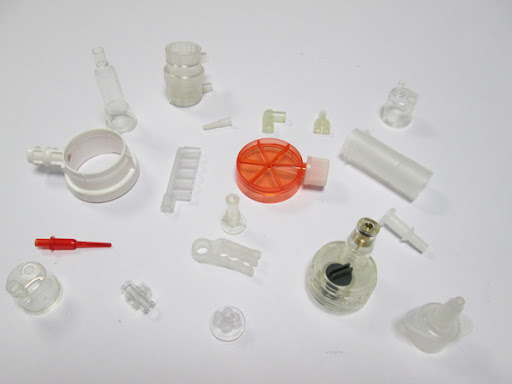
These are the industries where metal replacement is already standard practice, not a future trend:
Automotive
Cooling systems, pump units, brackets, radiator parts and oil pans, components traditionally machined or cast in metal, now moulded for weight and cost savings.
Aviation
Flanges, tanks, inlet valves, and filters and opening systems, where dimensional stability, thermal resistance and resistance to dynamic loading are non-negotiable.
Electric and electromechanical
Electrical cabinets, junction boxes, switchboards, panels, plugs and sockets, applications where technopolymers add electrical insulation on top of the weight and design advantages over metal and ceramic.
Medical
Components in polycarbonate, polypropylene, polyethylene and custom polymer formulations, chosen for biocompatibility and the ability to withstand sterilisation.
Various
LED lighting, pneumatics, pet food and pet care equipment, and other applications where the right technopolymer beats metal on cost-performance.
Ready to move from metal to polymer?
Metal replacement only works when the material, the mould and the process are engineered together, not chosen separately. That is the discipline Idea Stampi has applied since 1986, across automotive, aviation, electrical, electromechanical and medical components alike - and it is why a feasibility review, not a catalogue, is always the first step.
Contact Idea Stampi's technical team for a free, no-commitment feasibility review of your metal component.
Contact us now
Frequently Asked Questions
- What can replace metal in manufacturing?
Technopolymers such as PPS, PEI, POM, PBT, PPO and PEEK commonly replace metal in parts that need dimensional stability, chemical resistance or electrical insulation, at a fraction of the weight of steel or aluminium. - Is engineered plastic as strong as metal?
For the loads and temperatures a component actually experiences, the right technopolymer can match or exceed metal performance. It isn't universal, though, which is why we start every project with a feasibility review. - How much weight can be saved by replacing metal with plastic?
Polymers are less dense than steel or aluminium, so most conversions save weight, but the exact figure depends on part geometry, wall thickness and material choice, and is assessed case by case. - What certifications should a metal replacement supplier hold?
ISO 9001 for quality management is the baseline. ISO 14001 environmental certification is a further signal of documented process control, which matters if sustainability is part of your business case. - How long does a metal-to-polymer conversion project take?
It depends on part complexity and volume. A typical project moves through feasibility, design engineering, mould construction, then testing and pre-series.